
Club News
All the latest news for PETERBOROUGH BIRD CLUB
Two Overseas Birding Tours for 2027 - With Steve Cale
Oct 13, 2026 Web Support
Birding Panama - Search for the Harpy Eagle 15th - 29th March 2027
Hermit, Spot-brested Woodpecker, Barred Puffbird & many more. We then work our way west making a number of stops including the famous Pipeline Road with it’s Ant Pitta’s, Oscellated Antbird, Great Jacamar, & many more. We visit different altitude habitats from the mud flats of Panama Bay to the highlands of El Valle & other wonderful areas. Near the Costa Rican boarder we look for Resplendent Quetzal & Tody Motmot among others & culminate our trip back near the Panama Canal staying at the excellent Summit Rainforest Resort with great birding the grounds. On my initial trip I saw an amazing 420 species of bird plus Mammals such as Panamanian Night Monkey, Reptiles & Butterflies with our superb guide kilo Campos. Kilo is the top birder in Panama & holder of the highest bird list in the country & is a really great guide to travel with.
Trip info
14 nights full board 15th - 29th March 2027
Tour level Moderate. Most of the birding will be done on short walks on slightly undulating or level ground although there are a couple of steeper short walks. In the Darien assuming the Harpy Eagle nest has not moved we will take a short boat ride down the river & then onwards to look for Harpy Eagle. We do have an option here to save us a hike in humid forest conditions to go on Horseback where a local worker walks in front guiding your horse. This does incur a small extra cost of around US$30 per person. By doing this the local people earn money from the eagles & it is in their interests to look after the birds.
Group size max 8 participants + Leader Steve Cale & local Guide
Tour Cost £3595 + flights. Booking deposit £150. Single room supplement £300
Birding Bulgaria - Land of the Wallcreeper 17th - 28th May 2027
We have a couple of main target stops en route taking in breeding sites for Eastern Imperial Eagle, Lesser Kestrel & Masked Shrike. We stay on the Banks of the Arda River near Madzahrovo. This is vulture country & we visit sites for Griffon, Black & Egyptian Vulture along with a host of other great raptor species. This is a great area for Warblers such as Eastern Orphan, Bonelli’s, Sub-alpine & Olivaceous along with Barred & others. Nightingales are everywhere and we usually see Shrikes,
rollers, Bee-eaters & Orioles to name a few. We head deep into the mountains to Devin & here we look for Wallcreeper at the famous Trigrad Gorge plus Alpine Swift, Black Redstart, Crag Martin & Rock Bunting. We search for the continental sub species of Crested, willow, Marsh & Coal Tit plus Crossbill & others. We finally head to Sofia making stops en route for Black Headed Bunting & Montagu’s Harrier. In the Vitosha Mountains we look for the eastern race of Ring Ouzel, Honey Buzzard, Firecrest & Spotted Nutcracker. We usually see 175 - 200 species of bird & over the years I have tried to fine tune this trip to give best chances to see a superb range of species & on the tour we’d expect to see around 25 species of Butterfly. Mammals can include Golden-backed Jackle, Wildcat & Red Squirrel & a good number of reptile species can be seen.
Trip Info
11 nights full board 17th-28th May 2027.
Tour level easy to moderate. Birding is largely done by short walks on flat to slightly undulating terrain from our Mini bus.
Group size max 8 participants + Leader Steve Cale & local Guide.
Tour Cost £2195 + flights. Booking deposit £150. Single room Supplement £220
Report of Titchwell |Trip, Sunday 11 th Oct
Oct 13, 2026 Web Support
We met at the Titchwell carpark on a sunny day. With it being high tide we walked along the beach path to the sea. A bit windy, but plenty of waders on the beach; both types of Godwits, Oystercatchers, Knot, Sanderling. The sea wasn’t particularly fruitful, but there were Gannets at a distance. We had a slow walk back, calling in at the Parrinder Hide where we saw plenty of birds with Wigeon in for the winter, Ruff, Godwits and Avocets.
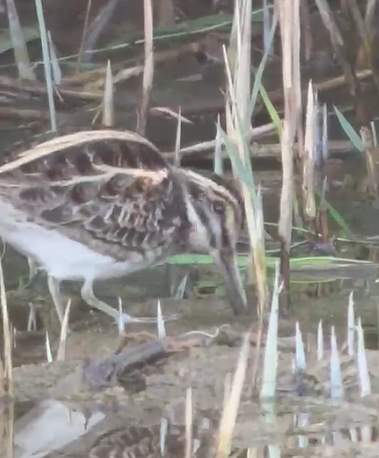
The RSPB warden had a photo of a Bittern from Patsy’s so both he and us walked around to the pool. We were given instructions where the bird had last been seen but no joy. Time for lunch. We moved onto Holme Nature Reserve and walked along the dunes, looking towards the sea, we had divers, Scoter and a few Gannets. Again, there was good number of waders on the shoreline. From the hides, Margaret found a Barn Owl flying over the reed beds. In the next hide we had a Jack Snipe
bobbing as it fed.
In all we had 76 species so a very good haul for the day.
Change to Frampton Trip 11th September 2026
Oct 4, 2026 Web Support
We will meet at the same time 10.00am in the Titchwell car park which is also a RSPB reserve. We apologise for the late notice but we have been waiting to see if any rain supplemented the water on the reserve and were unaware of the EA work planned until very recently.
Report for Bird Ringing - Pitsford Reservoir
Sep 16, 2026 Web Support
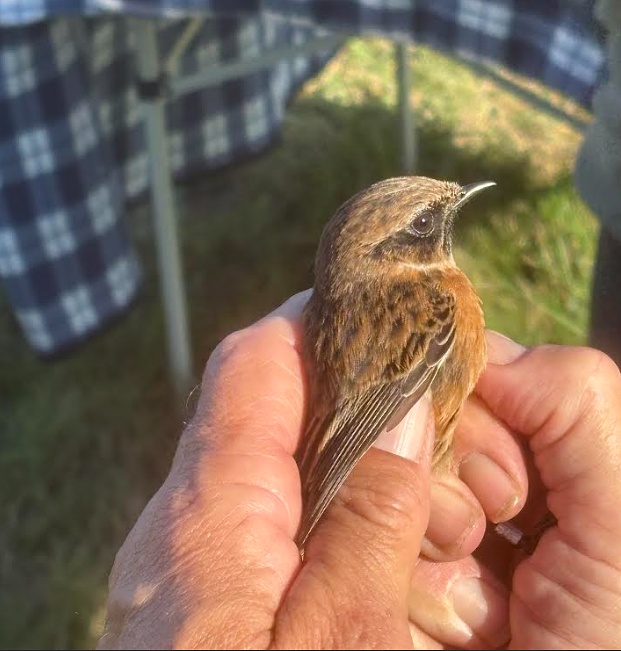
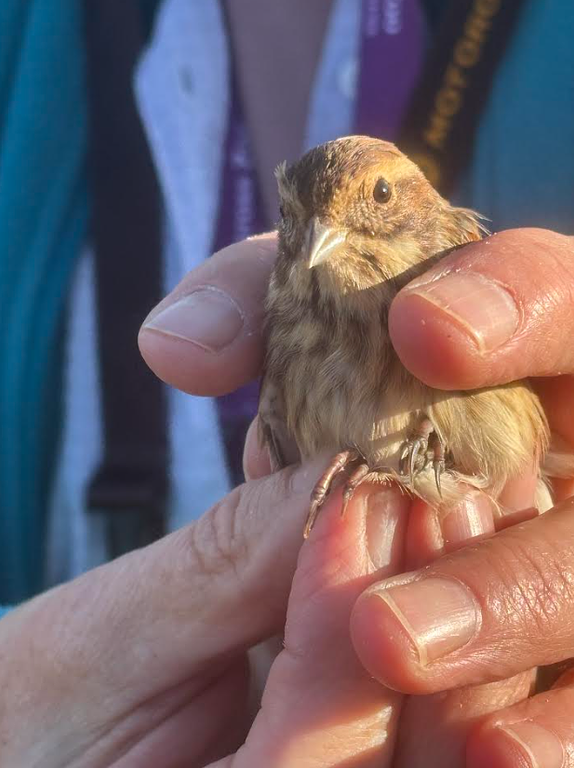
We had a number of birds, mainly Meadow Pipits, but the star bird was a male Stonechat; unusual for the ringers to even get in the nets.
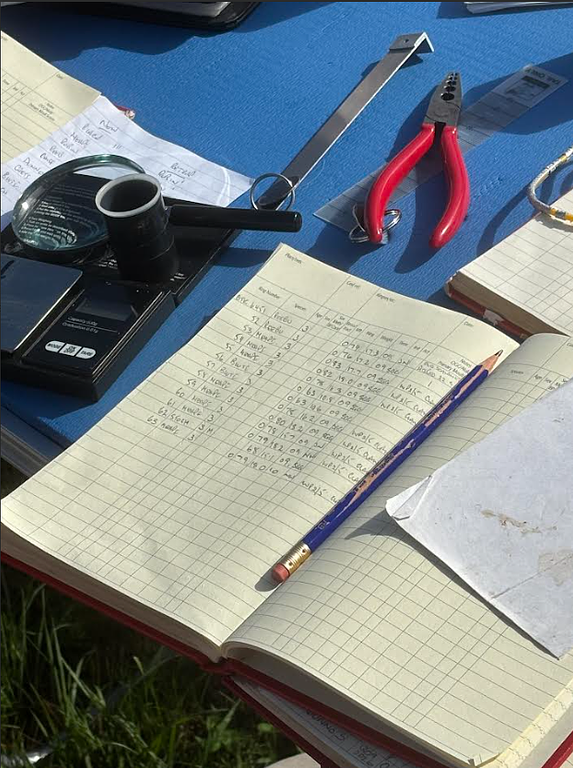
We also had a walk to the Bird Club hide; again, plenty of Great White Egrets fishing in the low water levels along with the waterfowl. There was a Ruff, Swallows going through and a Yellow-legged Gull near the dam. There were also a number of Clouded Yellows.
Outdoor Programme Dates and Locations Added
Aug 6, 2026 Web Support
2026
Sun 6 Sep East Sussex and Kent Out of Area Trip 12:00pm–6:00pm
2027
Indoor Meeting Programme 2026/27
Jul 24, 2026 Web Support
Steve moved to Norfolk 35 years ago having discovered it in his early birding days. It was the birding that drew him to this wonderful county but, over the years, he came to recognise its amazing biodiversity with its coastline, marshes, river valleys etc. From mammals and bees, moths to flowers the county holds a wealth of species and Steve’s interest broadened and he became a naturalist rather than just a birdwatcher. In his presentation he will look at some of the amazing creatures and plants that call Norfolk home.
Steve, a native of Wolverhampton, has lived in Norfolk since the mid-90’s. He is a lifelong birder and was a member of the West Midlands Bird Club until moving to East Anglia. He is also an accomplished bird artist.
7.30 pm Wednesday 28 October DR MICHAEL BROOKE NO ISLAND TOO FAR
Basing his talk on his 2025 book “NO ISLAND TOO FAR”, Michael Brooke, a previous speaker to the Club from the University of Cambridge, will take the audience to some of the world’s most isolated specks of land. Think sub-Antarctic penguins and albatrosses, petrels nesting at altitude among volcanic spires, and even Cape Verdean larks. Spanning 50 years of seabird research encompassing 40-odd islands in every ocean, the talk will celebrate the mayhem of life on distant colonies, the adventures and mishaps involved in reaching those colonies and, of course, the scientific reason for the visits that so often were accompanied by stormy seas, grim seasickness and immense human kindness.
Mike is the Curator Emeritus of Ornithology at Cambridge University’s Museum of Zoology. His doctorate was on Manx Shearwaters at Skokholm in Pembrokeshire. Since then he has been lucky to study seabirds all over the world. In the latter part of his career modern gadgetry has revealed in astounding detail what birds do at sea. This research provided the basis for his acclaimed book “Far from Land” which was the basis for an earlier talk he gave to the Club.
7.30pm Wednesday 25 November COLIN Mc SHANE THE BIRDS OF MONGOLIA
In 2017 Colin responded to a request by Batmunkh Davasuren in Mongolia for any experienced ringers to help establish a ringing centre in the country. He visited with 3 other ringers in September 2018 and the talk is an account of that initial visit and the stunning birds that he encountered. He returned in 2023 and has just come back from a third visit.
A lifelong birder, Colin started ringing in the mid-1970’s so has been ringing for almost 50 years. He has visited 10 countries to ring birds and has established ringing camps in Varanger, Norway (13 years) and Vilamoura on the Algarve (18 years). He is one of the founder members of the Belvide Ringing Group in Staffordshire and is a trustee of the West Midlands Bird Club. For the last 10 years he has studied Jack Snipe in the UK, pioneering the use of thermal imaging technology to revolutionise how we can find and count this species and more recently has pioneered the use of GPS trackers to study their local and international movements. He was awarded the Bernard Tucker medal for this work by the BTO. The Tucker Medal is awarded in recognition of an outstanding contribution to BTO’s scientific work.
7.30 pm Wednesday 27 January DR GREG CONWAY Nightjar Monitoring and Research
Greg’s talk will cover general Nightjar ecology and diet as well as population change results from the 2025 national survey. He will then go on to outline how GPS tracking has revolutionised our understanding of habitat use for both nesting and foraging, with particular insights into how breeding habitat can be managed optimally. Then he will provide an up-date on what GPS tracking has revealed about migration routes and wintering destinations.
Greg is a member of BTO’s Terrestrial Research Team. He is responsible for the organisation of national and regional single species surveys as well as data analysis and project development.
7.30 pm Wednesday 24 February OLIVER SLESSOR Birds, Birding and a Career in Ornithology
Oliver’s talk will cover his life working with birds in Britain and around the world over the last 20 years. He will speak about a variety of the different jobs that he has done, ranging from finding exciting rarities to undertaking Bird Observatory work to seabird protection of the rare and endangered Roseate Tern. Not to mention tracking down elusive Ant pittas in Ecuador as well as seeing 5 species of Vulture whilst surveying in remote Zambia. . Oliver works as a professional ornithologist, currently undertaking consultancy work on bird surveys in Norfolk and Suffolk. He started birding over 30 years ago, aged 6, in a hide at Minsmere. He has subsequently spent his whole life watching and studying birds. He is an experienced ringer holding a BTO “A” permit. He is particularly interested in bird migration, seabirds and the birds of Central and South America. He has worked at numerous Bird Observatories and has worked on seabird protection at many of the British and Irish Tern colonies. He has also worked as a Neo-tropic bird-guide. His new book, “Birds, Birding and a Career in Ornithology”, covers in detail the amazing experiences that he has had and the special birds that he has encountered from remote Rockabill to the canyons of Utah.
7.30 pm Wednesday 31 March JOSH JONES Gulls of Britain
Josh Jones introduces the various Gull species that can be found in Britain, discussing status, behaviour and identification. This talk is a must for those wrestling with identifying this wonderful but confusing group of birds.
Josh is a lifelong birder who grew up in the Peterborough area. His particular interests include patch-birding, migration and vagrancy with Gulls and Waders his favourite bird families. He is senior editor at BirdGuides.com and Birdwatch magazine.
7.30 pm Wednesday 28 April CHRIS HUBBARD My patch birding year at Stanford Reservoir
In his illustrated talk Chris will provide a history of Stanford Reservoir and a walk through his year on the patch in 2024 (and a quick look at 2025). He will bring to life some of his patch-birding experiences and provide a few ideas on how to get the most from birding a patch.
Chris has been birding since the early eighties. He was an active twitcher in the late 80’s and early 90’s and has birded overseas in Europe, the West Indies and West Africa and the Middle East. Whilst still enjoying seeing rarities he gets the most fulfilment from birding his patch and other sites in Leicestershire and Rutland. He is a member of the Leics and Rutland Ornithological Society (LROS) Records Committee, the sightings officer for the Stanford Ringing Group and part of the team that writes the LROS annual report.
New Trips - Out of Area Trips
Jul 23, 2026 Web Support


Rutland Water Nature Reserve Trip 24/6/26
Jun 23, 2026 Web Support
We headed to Kingfisher Hide, watching the butterflies on the way: marbled white, painted lady, meadow brown, and plenty of dragonflies. From the hide, we had distant views of the ospreys.
After a long walk, it was drinks back at the visitor centre.
From the hides to the west, we saw numerous birds, including many ducks in eclipse plumage, which is always a test for the observer. We also saw avocets – birds we would never have seen here a few years ago.
We had lunch at the visitor centre before four of us went on to the Lyndon Reserve, where we had good views of the ospreys: two adults and three young. The male left the nest and caught a fish in front of the hide before returning to the nest. We also had close views of a sedge warbler and a water vole running across the dyke.
Although it was a hot day, we recorded a total of 56 species, making it a worthwhile day.
PEAK DISTRICT TRIP REPORT
May 29, 2026 Web Support
a day’s birding organised by Derbyshire Ornithological Society. Alan Wragg,
Steve Thorpe and his partner Rachel from DOS met us at 08.30. The aim was to
find woodland and upland birds that in Peterborough we see on passage or not
at all.
There were 3 Jays near the car park before we walked through an avenue of
rhododendrons with Blackcaps and Chiffchaffs singing loudly and Wrens and
Robins singing too. After we passed the Hall we came to an area of flower-rich
meadows and open ancient woodland. This was where we had our first targets
with Common Redstarts and Pied Flycatchers showing well, notably a very
confiding male Pied Fly which came and perched on a dead tree right in front
of us. To our right was Longshaw Pond which, as well as the usual suspects
such as Mallard and Moorhen, is a site for breeding Mandarin Ducks. Swallows
flew above us and a Nuthatch was on a tree just beyond the pond at the side
of the path.
We continued on through Granby Wood, named after a son of the Duke of
Rutland, and crossed the B6521 before traversing the bridge over Burbage
Brook and entering Padley Gorge, an area of ancient sessile oaks and birch
trees with the brook running through it. Dipper and Grey Wagtail were found
in the Brook and a Treecreeper was above the path. What was first thought to
be a Spotted Flycatcher turned out to be a female Pied. Spot Flycatchers
appear not to have reached Padley yet and, at the outset, Alan and Steve had
explained that Wood Warbler, formerly a shoe-in at Padley, has not bred there
for two years and has not been seen this year.
We re-traced our steps back to Longshaw Hall café for lunch before driving to
Cutthroat Bridge on the A57 east of Lady Bower reservoir. After parking we
walked back for 100 metres before crossing over the road and climbing along
the rocky path to gain a vantage point looking out towards the moor. Red
Grouse and Ring Ouzel were soon found in good numbers as were Golden
Plover, Curlew and Lapwing. Kestrel, Buzzard, Stonechat and Meadow Pipit
added to the count.
We got all our target species and everyone was delighted, expressing their
gratitude to Alan, Steve and Rachel for their planning and guiding. They offered
to repeat the visit next year to some different locations and we look forward to
that very much. KEITH
BIRD LIST :
Jay
Blackcap
Chiffchaff
Robin
Wren
Willow Warbler
Common Redstart
Pied Flycatcher
Mallard
Mandarin Duck
Moorhen
Nuthatch
Blue Tit
Great Tit
Chaffinch
Greenfinch
Great Spotted Woodpecker
Siskin
Mistle Thrush
Swallow
Collared Dove
Wood Pigeon
Pied Flycatcher (F)
Dipper
Grey Wagtail
Treecreeper
Goldfinch
Dunnock
Blackbird
Long-tailed Tit
Swift
Red Grouse
Ring Ouzel
Meadow Pipit
Linnet
Stonechat
Golden Plover
Curlew
Lapwing
Kestrel
Common Buzzard
Raven
Jackdaw
Carrion Crow
Pied Wagtail
Essex, Kent and East Sussex Trip
May 19, 2026 Web Support
